Collect
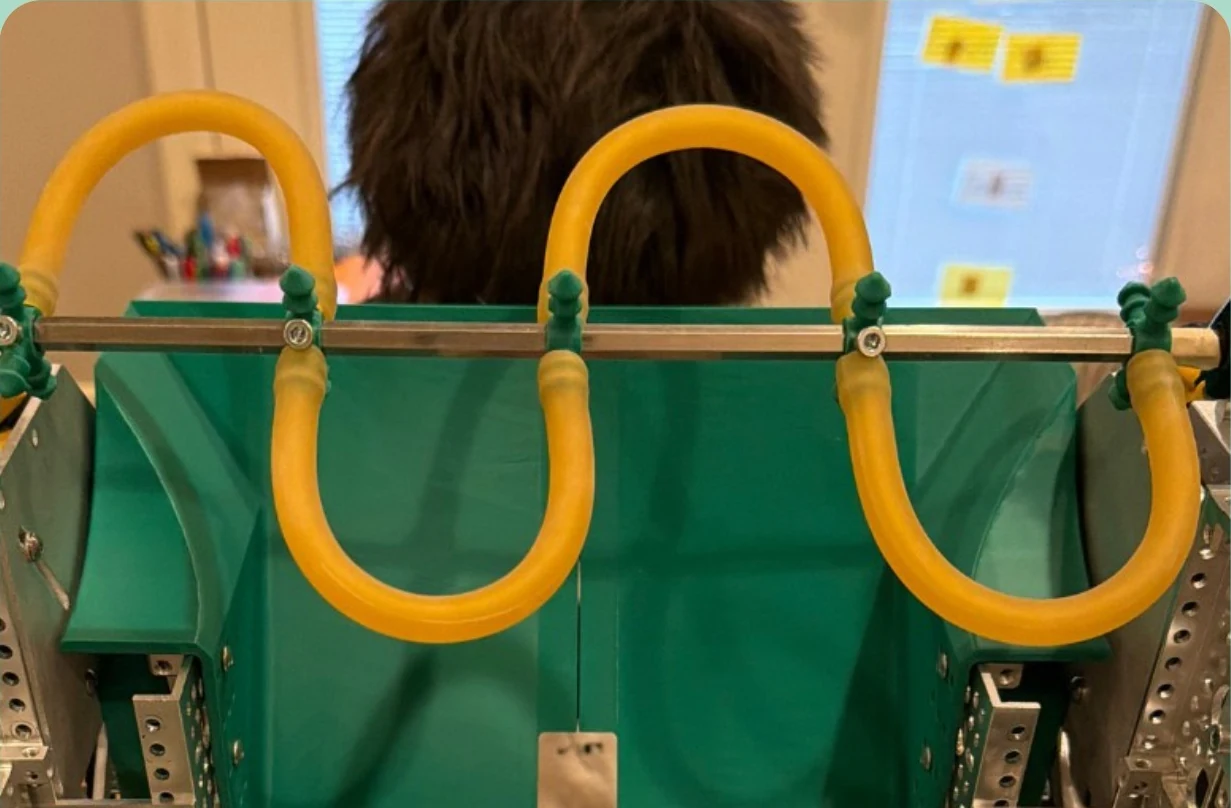
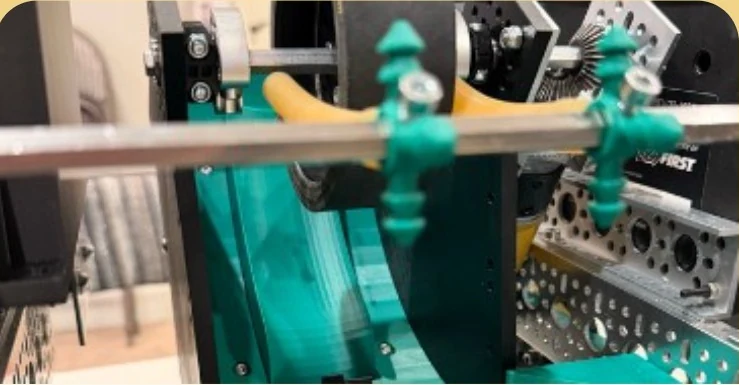
Flexible tubing loops bend around the game piece and bring it into the robot.
Our robot / BIOBUZZ 2026–27
A season challenge becomes a sketch. A sketch becomes a prototype. Through each round of building and testing, our students turn ideas into a robot that can collect, transfer, and shoot.
One robot. A connected design.
The robot's mechanisms work as one system. Flexible materials and custom printed parts help us handle both pollen and nectar game pieces along a shared path.
Flexible tubing loops bend around the game piece and bring it into the robot.
A guided internal path moves game pieces toward the shooter.
A flywheel and compliant ramp send game pieces toward the scoring target.
A closer look
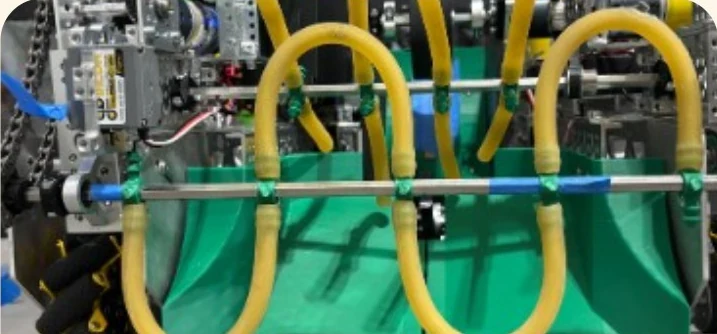
U-shaped surgical tubing flexes around different-sized game pieces. Printed guides help keep the loops aligned as the roller brings pieces into the robot.
The design grew through several prototypes, with changes to the roller, guides, and mounting as we tested.
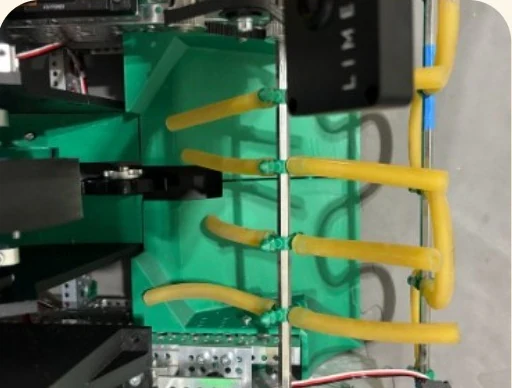
Compliant tubing helps move pollen and nectar through the same mechanism. A shared path keeps the mechanical layout simpler and reduces the need for separate handling systems.
Testing with real game pieces helps us spot gaps, jams, and places where the path needs to change.
At the rear of the robot, a flywheel works with a compliant ramp to launch game pieces. Printed parts let us try a change, test it, and replace it as the design improves.
Students compare shot consistency and mechanical fit as part of the build-and-test cycle.
Built for the field. Built for the workbench.
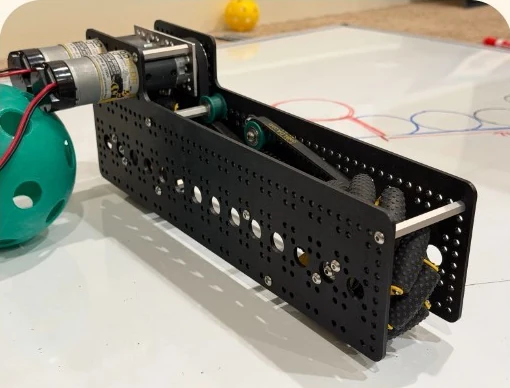
Mecanum wheels let the robot move sideways as well as forward and backward. The drivetrain gives the mechanisms a mobile foundation for collecting and scoring.
Our development work also focuses on access and repair. Parallel plates protect belts and motors, while printed parts, belt tensioners, and sliding mounts help us work on the robot between tests.
Design detail: a parallel-plate drive pod developed during the season.
Engineering is a process
We began with a minimum robot that could drive, intake, and shoot. Each iteration gives us something concrete to compare, measure, and improve.
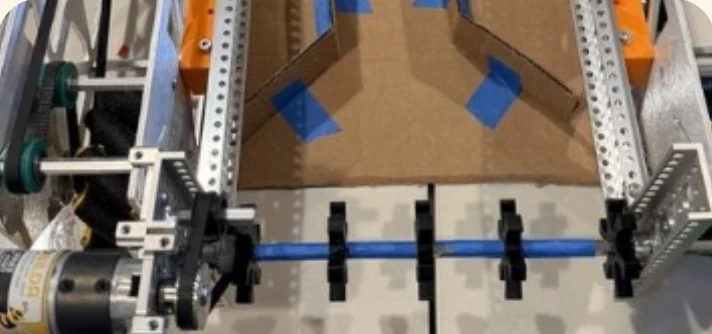
Cardboard and readily available parts let us check how game pieces move before committing to a more finished design.
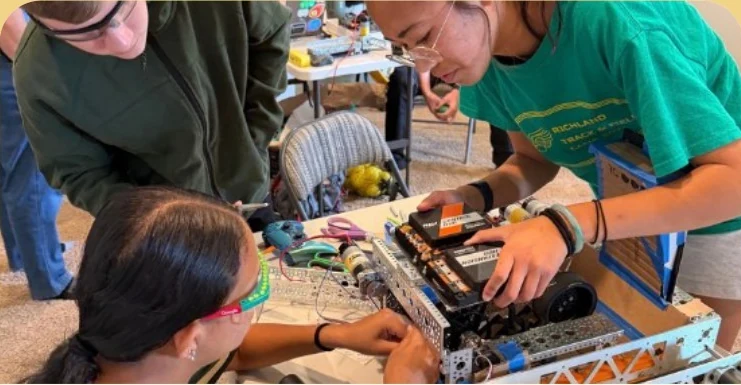
Design, build, and code students bring different perspectives to the same robot. Mentors help us ask useful questions and work through unfamiliar problems.
A part that looks right in CAD still needs hands-on testing. We use actual pieces to check fit and movement.
Printed guides and flexible materials make it easier to try another version when testing points to a better approach.
We consider how to reach components and replace parts as we develop the robot, alongside how each mechanism performs.
From the workbench to the field
Competition brings our design decisions together. Preparing the robot, discussing the field, and learning from a match are all part of what comes next.
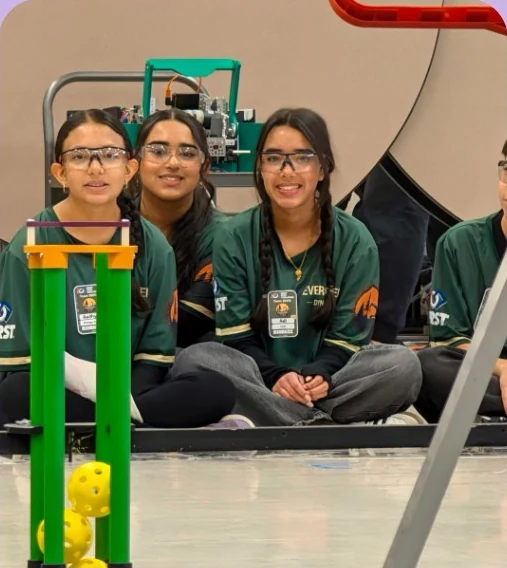
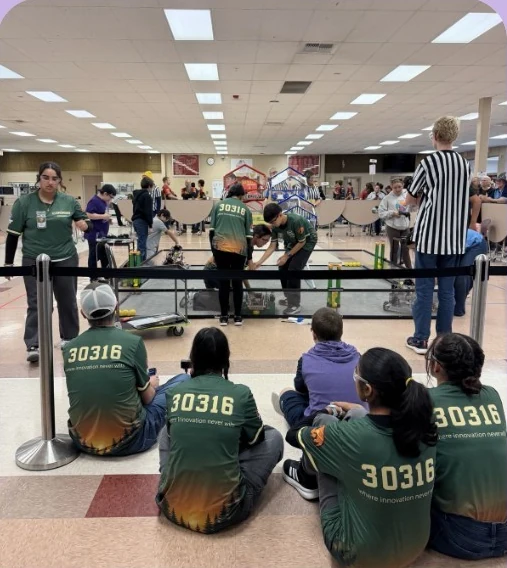
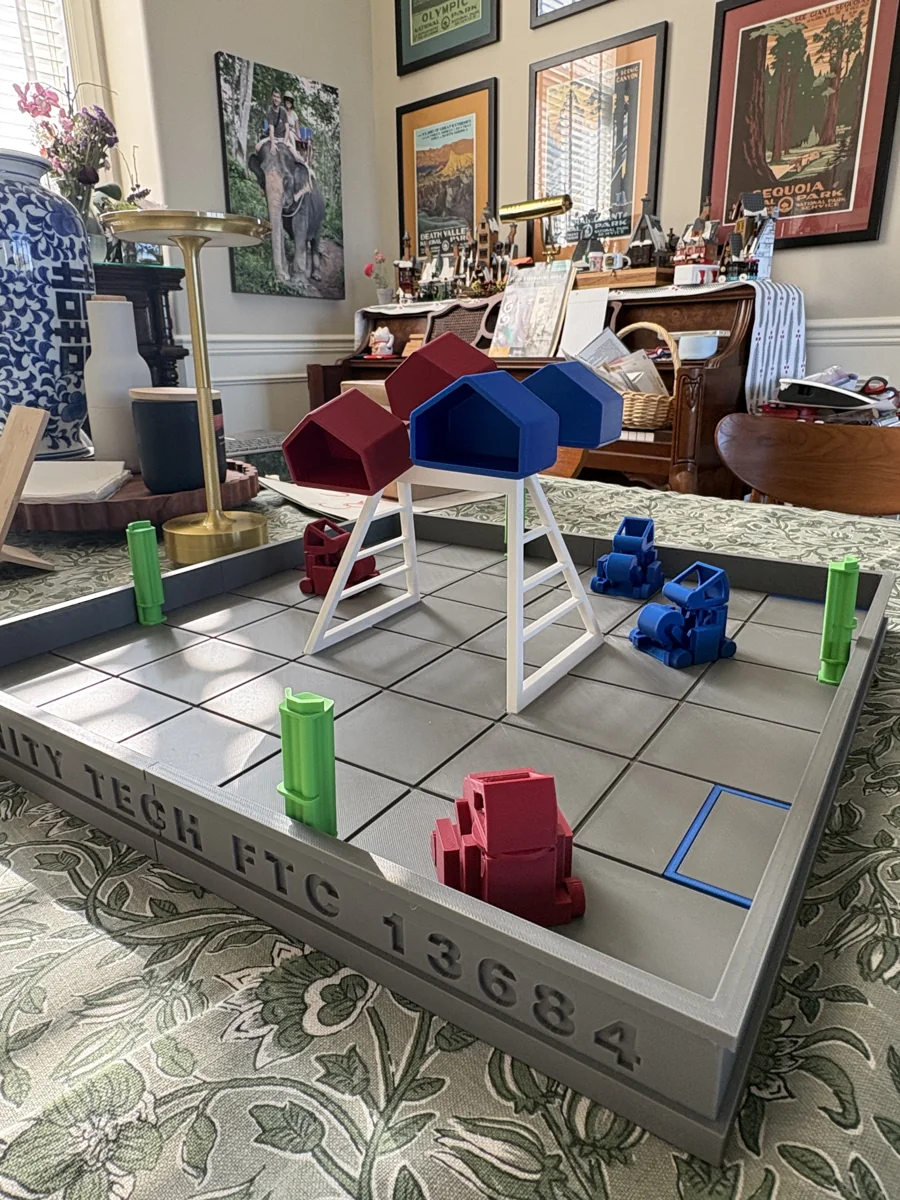
Photos show the 2026–27 robot and development work at different points in the season. The design continues to evolve.